The Story of the Rotaract Lifeboat
Rotaract Great Britain and Ireland formally launched in 1992 but it wasn’t the only notable Rotaract launch of the early 1990s because in 1995, Rotaractors celebrated 25 years of Rotaract worldwide with the purchase and launch of a lifeboat for the RNLI.
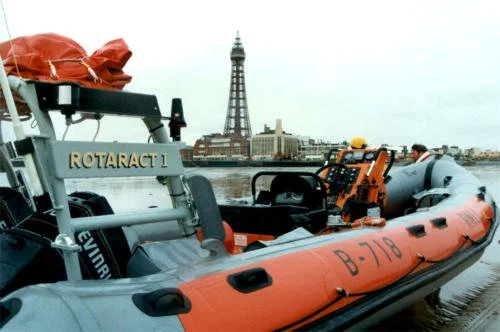
Rotaract I (B-718) at Blackpool
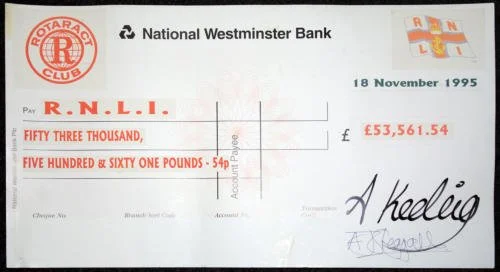
Officially handed over to the Royal National Lifeboat Institution at their headquarters in Dorset on Saturday 18th November 1995, the project was the culmination of four years of fundraising activities by clubs within Great Britain and Ireland as part of the ‘ROTABOAT' project which was conceived by Andy Keeling, Andy Steggall, Steve Powell and Tim Careless.
As part of the boat’s handover ceremony with Anthony Oliver, Deputy Head of Fundraising for the RNLI, the new Atlantic 75 lifeboat, B718, was blessed before Andy Keeling officially named the lifeboat ‘Rotaract I’ alongside around 80 other Rotaractors.
The cheque presented to the RNLI to finance the purchase of the lifeboat was for a total of £53,561.54 (equivalent to £112,206.54 today when adjusted for inflation) and was the collective fundraising efforts of clubs from across our network. The top three Districts that raised the most money for the project were Districts with no coastline and the year before the launch, District 1210 received a 'Significant Achievement Award' from Rotary International for the effort put into raising the funds for 'Rotaract I'.
Information in our archive shows that the lifeboat had over 100 hours at sea as part of over 60 launches and an additional 15 crew assemblies without launch. Assistance was provided by helicopter 17 times and 'Rotaract I' has been deployed in darkness 14 times.
At least 22 people's lives have been saved thanks to 'Rotaract I'!
With a top speed of 34 knots, 'Rotaract I' entered service as a relief boat, initially taking up post, as part of initial movements, at the Inshore Lifeboat Centre in Cowes, Isle of Wight, between the 1st December 1995 and 4th March 1996.
From there 'Rotaract I' moved to Blackpool, Lancashire, for station evaluation trials before entering full service until 20th February 1998, after which it returned to Cowes for the following six months.
It was while stationed in Blackpool that 'Rotaract I' had its first call out on 25th September 1996 following an incident which made national news.
A Royal Air Force Tornado lost control and was heading for Blackpool’s famous Pleasure Beach. The RAF pilot, realising the huge loss of life at stake, managed at very low altitude to turn the aircraft away from the resort and ditch into the sea only 100 metres from the Pleasure Beach. Both crew members managed to eject before impact. Members of the public pulled the crew out of the sea by their parachutes and 'Rotaract I' was immediately dispatched to help. Both of the RAF crewmembers survived uninjured.
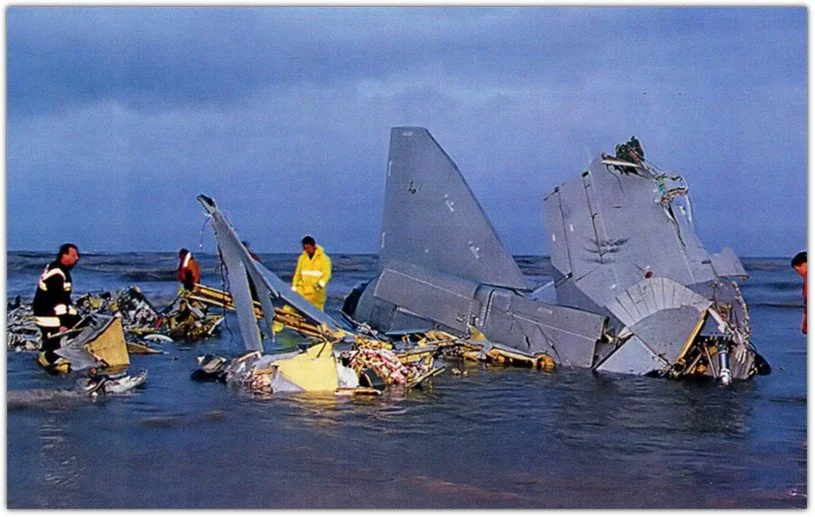
Accident Panavia Tornado F3 ZE759
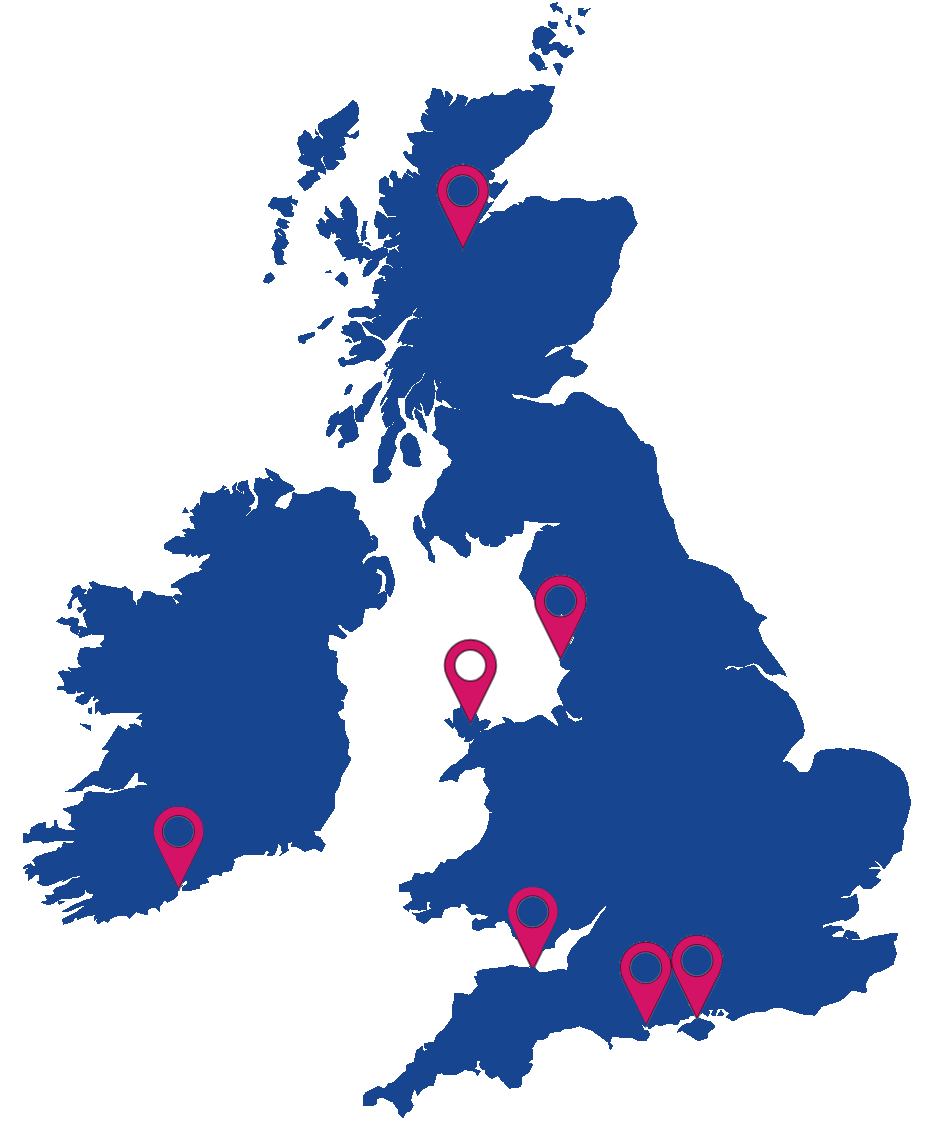
Following six months back in Cowes, 'Rotaract I' moved to Minehead, Somerset between 27th August 1998 and 24th March 1999 to replace another lifeboat while it was away undergoing a refit.
During this time one of 'Rotaract I' rescues involved bringing in a large power boat with machinery failure which resulted in 4 people brought in and £20,000 worth of property saved.
The lifeboat continued to support relief efforts with a move to Holy Island, Anglessey, until 5th July 1999 while the Trearddur Bay lifeboat underwent ballast tank modifications.
In 2002 'Rotaract I' worked as part of the relief fleet in Crosshaven, Cork, and later went on to be based at Loch Ness, Scotland, in 2009.
The last account Rotaract GBI has about the lifeboat’s work with the RNLI concerns the yacht ‘Rona’ which required assistance for the second time in three days after running aground in Urquhart Bay on the 12th April 2009. The sailor attempted to leave the harbour in his vintage sailing vessel but ran aground approximately 50 metres beyond the harbour entrance. The skipper was towed into open water and given advice about the weather conditions and the suitability of the yacht for the planned journey.
From 2010 'Rotaract I' moved on to service with the Icelandic Association for Search and Rescue with the boat being based on the east coast of Iceland in Neskaupstadur, a fishing village.
As Rotaract continues to evolve, the story of ‘Rotaract I’ remains an enduring chapter in our history and a testament to the ambition, generosity and impact of Rotaractors across Great Britain and Ireland.
This history has been compiled from the records, publications, archived materials and historical collections available at the time of writing. While every effort has been made to ensure accuracy, some information may be incomplete, inconsistent or missing due to gaps in the archive. Inevitably, some details may have been lost to time and we recognise that part of our story resides in the experiences and memories of our network and alumni.
We therefore welcome corrections, additions and further detail to help ensure this record remains as accurate, complete and representative as possible. You can get in touch with Rotaract Great Britain and Ireland using our contact page.